Business
Company Incorporation Stamp Duty Calculator
Check stamp duty in your State and incorporate hassle-free.
Calculate




Every parent wants their baby to sleep through the night.
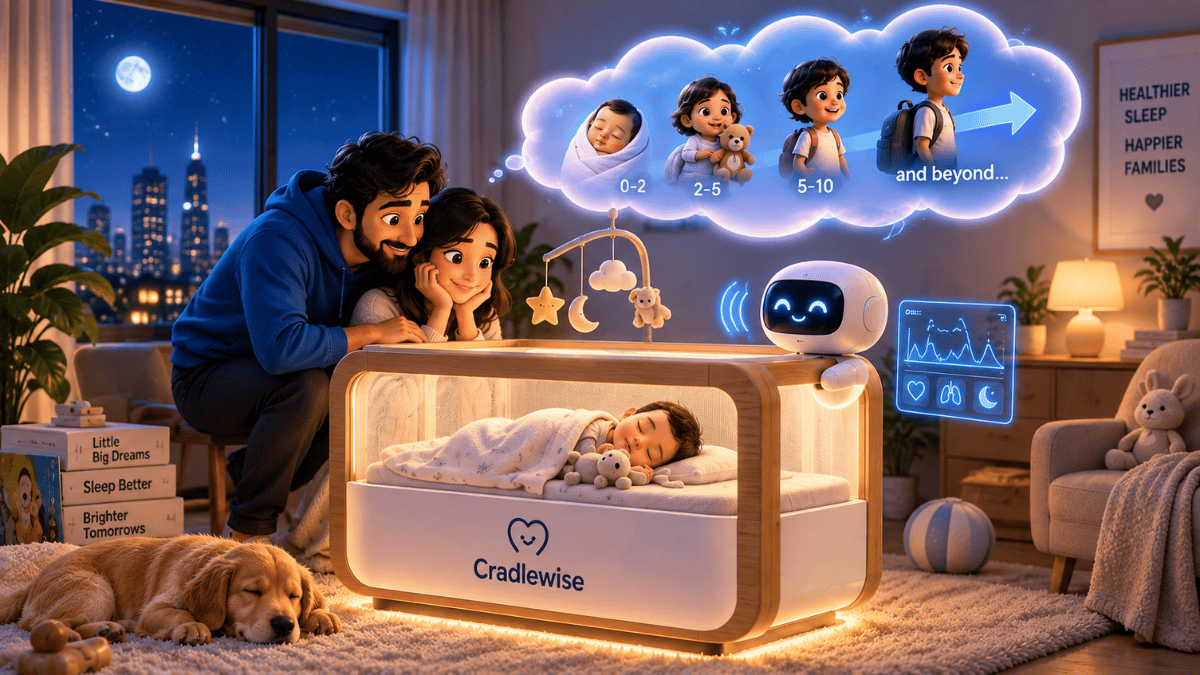
And Cradlewise has built a rather expensive piece of technology around that problem: a smart crib that monitors a baby's sleep and tries to soothe them before they fully wake up.
Now investors are putting another $12 million behind the idea.
The Series A round was led by 3one4 Capital and Prudent Investment Management, taking Cradlewise's total funding to $26 million.
But there's an interesting problem hiding behind the fundraisers.
Cradlewise's current product primarily serves children from 0 to 24 months.
So how do you build a large consumer technology company when your customer literally grows out of your main product?
A normal crib waits for the baby to wake up.
Then the baby cries.
Then the parent wakes up.
Cradlewise is trying to intervene one step earlier.
Its smart crib uses sensors to monitor things such as movement, sound and sleep state. Its AI then tries to identify when the baby is beginning to stir and can automatically start soothing them before they fully wake up.
So the real product isn't the crib itself.
It's the sleep system built around it.
Cradlewise says its technology has already processed more than 75 million hours of sleep data, which it uses to improve detection, prediction and personalisation.
And that data could become increasingly important as the company grows.
Because the more the system understands sleep patterns, the better it could potentially become at knowing when and how to respond.
Babies grow.
Quickly.
That creates an unusual business problem.
Imagine a software company. It can acquire a customer today and, if the product remains useful, potentially keep that customer paying for five or ten years.
Cradlewise doesn't automatically have that luxury.
Its current crib is designed around the 0–24 month infant stage. Eventually the child grows out of it.
That means the company can't simply depend on selling more smart cribs forever if it wants to build a much larger consumer health business.
It either has to continuously find new parents...
Or find more things to sell to the parents it already has.
And its latest plans suggest it wants to do both.
Cradlewise says the new funding will go towards growth, expanding sales channels, product R&D and international expansion.
But buried inside those plans is something more important.
The company wants to move beyond the crib.
Its roadmap includes software-led sleep routines, additional child-sleep hardware, lower-priced products and reusable sensing and electronics modules that could help it develop future products faster.
In other words, Cradlewise doesn't want the customer relationship to end when the baby leaves the crib.
It wants to stay relevant as the child grows.
And that changes the business.
Instead of being a company that sells an AI-powered crib, Cradlewise could eventually become a broader child-sleep technology platform.
The crib gets the company into the home.
The larger opportunity is everything that could come afterwards.
There's another interesting part of this story.
Cradlewise is headquartered in San Francisco, but its cribs are manufactured at an integrated facility in Pune.
The company says the facility can produce, test and pack thousands of cribs every month.
That matters because building a hardware startup is very different from building an app.
Software can be updated and distributed to thousands of customers almost instantly. A physical product has to be manufactured, tested, packaged, shipped and serviced.
Add sensors, electronics and moving components to that product, and things become even more complicated.
Cradlewise therefore has to get two businesses right at the same time.
AI and software have to work.
And the physical product has to work reliably inside someone's home.
That's a much harder combination to scale.
Anyone can theoretically build another connected crib.
Replicating years of real-world sleep data is harder.
Cradlewise says its products have generated more than 75 million hours of sleep data.
If that data genuinely improves how accurately its system understands different sleep patterns, it could create an advantage that grows as more families use the product.
But data alone doesn't guarantee a moat.
Parents still have to trust the technology. The hardware has to remain reliable. And Cradlewise has to convince families that the extra intelligence is valuable enough to justify choosing its products over simpler alternatives.
That's where the next phase gets difficult.
The $12 million funding round gives Cradlewise more money to expand internationally, enter more online and offline channels and develop new products.
But its bigger challenge isn't simply selling more cribs.
It's extending the relationship with parents after those cribs are no longer needed.
That's why the company's move towards software, new child-sleep hardware and lower-priced products may matter more than the funding headline itself.
Cradlewise started with a very specific problem: helping a baby sleep without constantly waking the parents.
Now it has to figure out how many other problems around childhood sleep the same technology can solve.
Because babies will inevitably outgrow Cradlewise's crib.
The real $12 million bet is whether Cradlewise can make sure parents don't outgrow the company with it.
Disclaimer: This content is published for informational and educational purposes only and should not be considered legal, tax, financial, or professional advice. Please consult a qualified professional before making any financial or business decisions. Startup Movers shall not be liable for any loss or damage arising from reliance on this content.
Published Date: 05 Sep 26
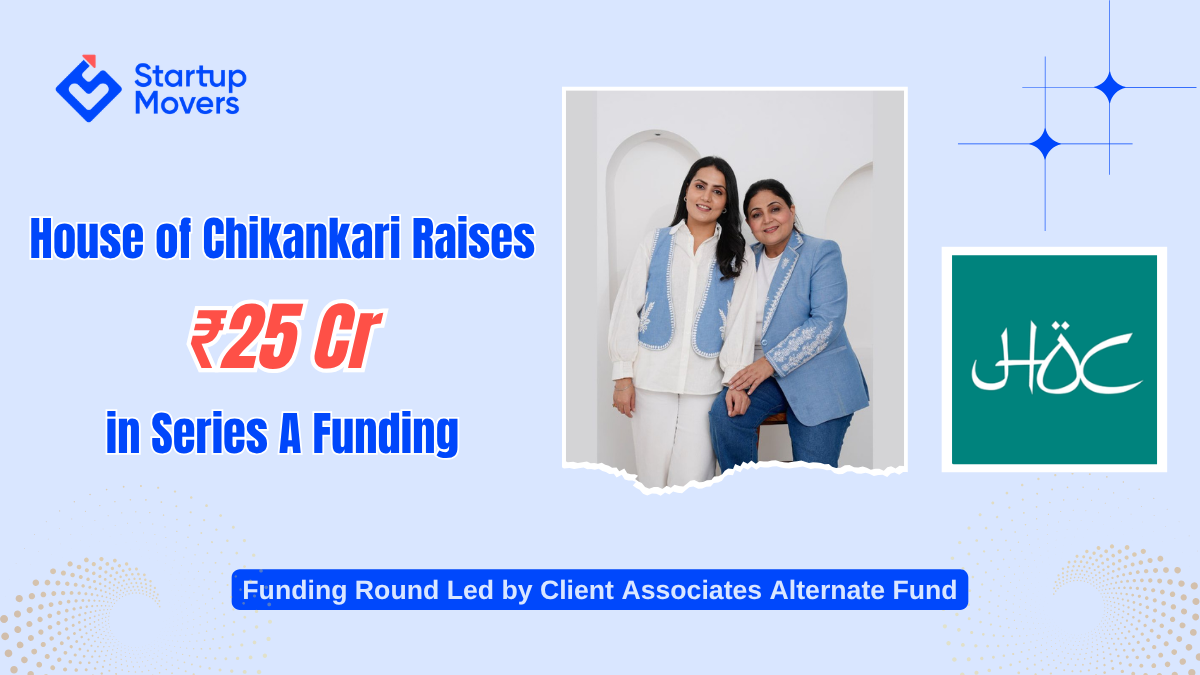
April 2026 - Delhi-based D2C ethnic wear brand House of Chikankari (HOC) has raised ₹25 crore (~$2.6...
READ MORE

February 2026 - Gully Labs, a culture-driven sneaker brand co-founded by Arjun Singh and Animesh Mis...
READ MORE

UPI has trained us to expect one thing from digital payments, scan, pay and move on without thinking...
READ MORE

February 2026 - In the latest Shark Tank India Season 5 episode, health-wellness startup Wholeleaf s...
READ MORE



© 2026 Startup Movers All rights reserved. | Designed By : The Night Marketer